
The Psychology of Why a Story Gets In When a Lecture Doesn't


In Part 1 we looked at why direct instruction hits a ceiling. Here's the mechanism underneath it — what's actually happening, psychologically, when a story gets through and a lecture doesn't.
What's the psychological difference between telling a child a rule and telling them a story?
A direct instruction asks a brain to stop, admit something is wrong, and change course — which is exactly the sequence most brains resist, at any age. A story never asks for that admission.
Think about the last time someone told you to "just relax" while you were stressed. It probably didn't relax you — it just added the feeling of being judged for not already being fine. Children feel that same defensiveness, amplified. Tell a child to stop being scared and their brain doesn't register helpful advice. It registers a correction, and it puts up a guard.
A story sidesteps all of that. It doesn't confront anyone face-to-face. Nothing is being defended against, because nothing has been presented as a challenge.
Same appetite, different discipline
A fair objection here: isn't this just… telling stories? People already watch movies and swap gossip constantly. True — adults never outgrow the appetite for narrative, they just trade fairy tales for streaming and office chatter. What's different isn't the hunger. It's the discipline applied to feeding it.
Everyday story | Therapeutic story | |
Built for | A general audience, or no one in particular | One specific person or group |
Conflict | Heightened for engagement | Brief, symbolic — just enough |
The real person | Gossip often names and exposes someone real | No one is ever named or exposed |
Ending | Whatever satisfies the drama | Calibrated to what's safe for this listener |
Who's accountable | No one | The teller, considering this listener specifically |
This isn't teaching anyone to want story — they already do, in full supply. It's teaching the discipline of aiming it at one person, on purpose.
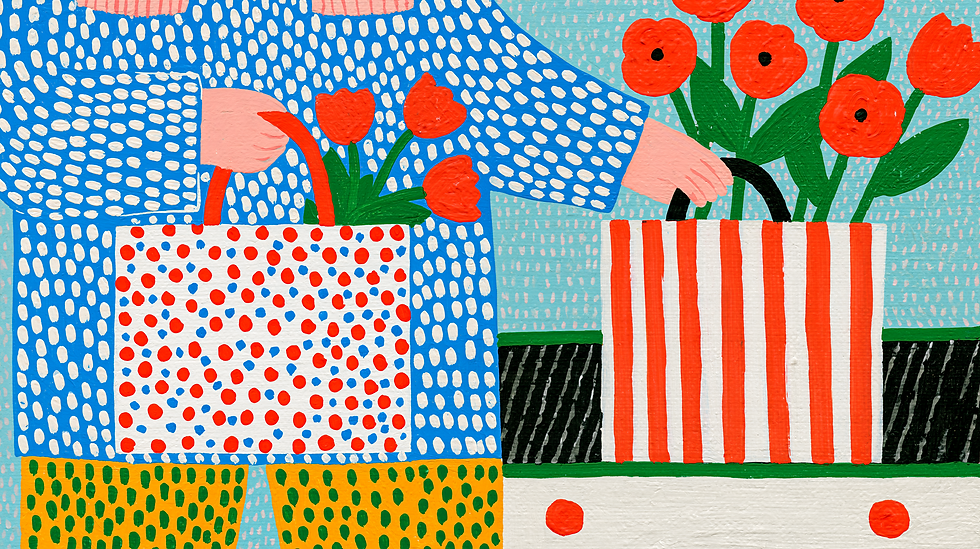
A lecture is a bag you have to keep carrying — the moment you put it down, it stops moving. A story is a conveyor belt: once it's loaded, it keeps moving on its own, long after you've let go.
Why this matters beyond childhood
None of this is age-limited. An adult who's stuck inside a situation — a difficult diagnosis, a career ending, a strained relationship at work — has usually told themselves the story a hundred times already and is still stuck in it. A metaphor arrives underneath the rehearsed language, in a place the rehearsed version can't defend against. Nobody has been talked at, which is exactly why it works on people who are far too articulate to be advised directly.
Want the full mechanism, the framework behind it, and where it starts to break down? It's all in the free guide.
FAQ NOTE:
Q: What's the psychological difference between telling a child a rule and telling them a story?
Q: Is storytelling just another word for movies or gossip?
(Answers already covered in body copy above.)


Comments