
Esok, Esok, Esok

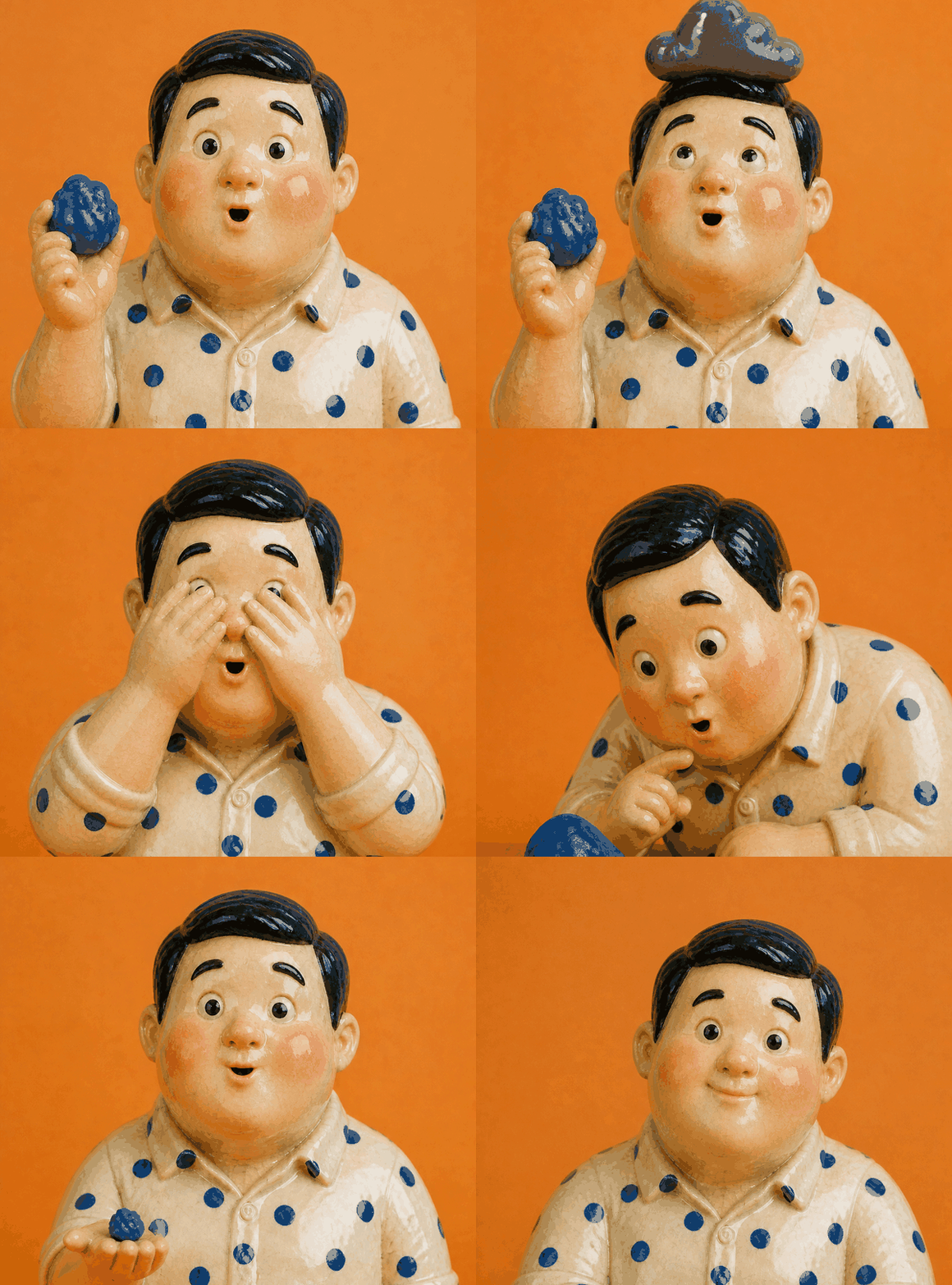
This is Encik Esok. Esok means tomorrow, which is exactly when he plans to start.
You may know someone like him. You may even have been him, once or twice.
Here is the strange part. Encik Esok is smart. He works hard. He has read the books about saying no, and he could explain them to you over teh tarik. But every Monday, his boss asks for one more report. And every Monday, before his head can say a word, his mouth says, "Okay, can."
He says he will change. Esok. Again.
You can read every book on swimming and still sink. Knowing how is not the same as doing. So what is really going on?
He was clay once
Look closely. Encik Esok is ceramic. But he was not always like this. He was clay once: soft, warm, easy to shape. Then life fired him in the same shape, again and again.
That is how a pattern is made. Not a fault. Just a shape that got fired too many times.
So how does a fired shape change?
Start with the map

Think of change as a car trip. You need three things:
Push is the engine. It gets you moving.
Path is the road. It is how you get there.
Pull is the address. It is where you are going.
An engine with no road goes nowhere. A road with no address goes nowhere too. You need all three. Here is each one up close.
Push: what you are leaving behind

Push is the feeling of "I cannot do this any more." Tired. Fed up. Enough.
Push is like a fire alarm. It tells you to get out, but it does not say where the exit is.
Encik Esok has plenty of push. He has been tired for three years.
Path: how you get there

Path is a first step small enough to take, somewhere safe to try it, and someone beside you.
Think of stepping stones across a river. Nobody jumps the whole river. You step on one stone, then the next.
Encik Esok tried to leave the office at six every day, starting on his busiest week. On Friday, his boss walked past at 5.55pm. He sat back down. He did not fail. His path was a cliff.
Pull: where you are going towards

Pull is a picture of your life after the change. Not an idea. A picture you can almost feel.
Think of moving house. People do not pack boxes only because the old place is bad. They pack because they have stood in the new kitchen and imagined the morning light there.
Ask Encik Esok what life looks like after the change. He says, "Less tired, lah." That is not a picture. That is just a complaint, said softly.
Why you need all three

Here is the surprising part. The three do not add up. They multiply.
Lots of push and lots of pull, but no path: 10 × 10 × 0 = 0
A little of each: 3 × 3 × 3 = 27
A little of all three beats a mountain of pain with no road. That is how smart, hard-working people stay stuck for years.
Do you have to wait for a crisis?
Some people say you do. A burnout. A health scare. A loss. That one big push that finally breaks through.
Sometimes it does. But a crisis is a terrible plan. You cannot choose when it comes, and you would never wish for one.
And even a big push still needs somewhere to go. Many people live through a crisis and come out the same, because the path and the pull were never there.
Here is the good news: path and pull can be built. You do not have to wait for life to push you.
Why we start with the hands
Talking about a change is like reading a recipe. Making something with your hands is like tasting the dish.
When you shape a small picture of your new life in clay or colour, it stops being a sentence in your head. It sits in front of you, where you can look at it. And moving a piece of clay to a new place is a tiny practice run. Nothing is at stake. It is only clay. So the body is willing to try.
No art skills needed. Nobody tells you what your picture means. You never have to tell your story out loud.
Sometimes the handbrake is on

The engine runs. The road is clear. You know the address. And still, you do not move.
That is because there is one more thing: what we are protecting ourselves from.
"If I do not start, I cannot fail."
"If I do not send it, nobody can judge it."
That is what procrastination and avoidance often are. Not laziness. A handbrake the body pulled up long ago, to keep you safe. You cannot argue a handbrake down. What helps is to see it from the outside, where it is smaller than it felt from inside.
That is exactly what we look into in our next programme: two free live evenings with Prof. Hildrun Rolff (40 years in art therapy and sensorimotor, trauma-informed work), Wednesday 18 and 25 November 2026, 6.00pm to 8.30pm Malaysia time, on Zoom.
Find out more → https://mini.learnartbased.com
Which one is missing for you?

Pick one change you keep saying "esok" to. Then ask yourself:
Push: What am I tired of?
Path: What is the smallest first step I could take this week?
Pull: What would one ordinary evening look like after the change?
The one you cannot answer is the one that is missing.
Our free guide, Esok, Esok, Esok, walks you through all three with Encik Esok, a page to write on, and where the idea comes from.
Read it. Then come and practise it with us.
Push, path and pull is our plain-English take on the Formula for Change by David Gleicher, Richard Beckhard and Kathleen Dannemiller: dissatisfaction × vision × first steps must be bigger than resistance. Full sources are in the guide.
Want the next one in your inbox? Subscribe to our newsletter.


Comments